
In a remarkable display of global ambition and geopolitical strategy, Elon Musk has forged a significant partnership with Saudi Crown Prince Mohammed bin Salman, setting the stage for an extraordinary $600 billion collaboration that integrates advanced technology with national defense within an unprecedented bilateral framework between the United States and Saudi Arabia.
This agreement, revealed at the U.S.-Saudi Investment Forum in Riyadh, is expected to transform both the economic and military landscape of the 21st century, elevating Musk beyond a mere corporate leader to a geopolitical influencer capable of reshaping superpower alliances through innovation. The forum, held in Riyadh’s Financial District, served not only as a symbol of luxury but also as a meticulously planned strategic event.
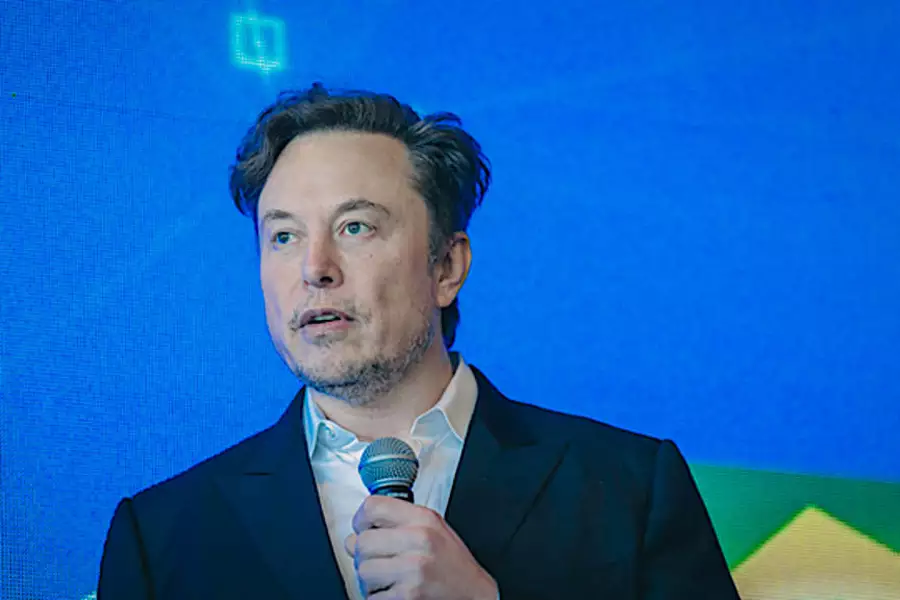
While President Donald Trump delivered a strong keynote speech reaffirming America’s commitment to ‘strategic capital investment,’ it was Elon Musk who captured the audience’s attention. Clad in a tailored black suit without a tie—reflecting his unconventional style—Musk articulated an expansive vision that encompassed the deployment of millions of humanoid robots throughout the Middle East, the enhancement of autonomous transportation networks powered by Tesla, and the provision of Starlink’s satellite internet services as a foundational element for regional security infrastructures.
The Crown Prince of Saudi Arabia, recognized as the key figure behind Vision 2030, displayed clear enthusiasm for Musk’s proposals, nodding in agreement as Musk outlined a strategy for implementing Optimus, Tesla’s humanoid robot, in essential sectors such as logistics, public works, cybersecurity, and battlefield reconnaissance.
Sources within the forum indicate that bin Salman perceives Musk’s advancements in robotics and artificial intelligence as pivotal to the transformation of Saudi Arabia’s workforce and its efforts to diminish reliance on oil revenues.
The projected $600 billion investment is not a singular transaction but represents a comprehensive investment plan over the next decade, which includes more than $200 billion allocated for the deployment of robotics and AI in Saudi cities, $150 billion for satellite and communication infrastructure, $120 billion designated for electric defense systems, and the remaining $130 billion reserved for manufacturing centers, training facilities, and cybersecurity partnerships with the U.S. defense industry.
This collaboration transcends mere commercial interests; it signifies a shift in geopolitical dynamics. Musk, who is already entrenched in defense contracts through SpaceX’s agreements with the Pentagon and Starlink’s involvement in Ukraine, is solidifying his role within the American military-industrial framework.
While some critics have raised concerns regarding the national security risks associated with such private power consolidation, proponents contend that Musk’s innovative approach, foresight, and technological capabilities are precisely what contemporary geopolitics necessitate.
A significant highlight of the forum was when a Tesla Optimus robot took the stage to present a ceremonial document to the Crown Prince. Designed to replicate human movements and vocal inflections, the robot bowed and proclaimed, ‘The future is now, Your Highness.’ The audience responded with enthusiastic applause, and the gesture carried profound implications for astute observers: Musk is not merely marketing products—he is crafting narratives of influence.
President Trump, familiar with grand spectacles, acknowledged the significance of the moment. ‘What Elon is doing is historic,’ he remarked. ‘We are not just manufacturing vehicles or spacecraft—we are shaping the future of liberty and safety. America first, but through collaboration, not seclusion.’ This sentiment resonated throughout the forum, indicating a shift from previous U.S.-Saudi discord towards a practical alliance of shared goals.
Importantly, this agreement emerges against the backdrop of increasing Chinese presence in the Middle East. Beijing’s Belt and Road Initiative and its recent diplomatic efforts have significantly penetrated Gulf markets. Musk’s involvement, with the explicit support of Washington, is widely seen as a strategic response to this influence. In essence, Musk transcends the role of a mere entrepreneur in this context—he embodies America’s ambassador of innovation.
One of the most significant elements of the partnership is the creation of a new initiative known as the ‘Tech Sovereignty Corridor.’ This proposed project aims to connect research and manufacturing centers located in Texas, Nevada, Riyadh, and NEOM. According to leaked documents, this corridor will feature the inaugural AI citizenship zone, where both humanoid robots and humans will have equal opportunities in educational and labor systems.
Musk refers to this concept as ‘coexistence engineering,’ while detractors label it as ‘a techno-dystopia in the making.’ Nevertheless, the momentum generated is unmistakable. Following the announcement, stock markets experienced a surge, with Tesla shares increasing by 12% and Lockheed Martin, a potential future collaborator in the AI-defense initiative, rising by 7%. Starlink is anticipated to double its satellite launch schedule to support its growth throughout the Middle East, and recruitment has already commenced for Arabic-speaking engineers, AI ethicists, and multilingual drone operators.
As the forum concluded, a final image underscored the historic significance of the event: Elon Musk, President Donald Trump, and Crown Prince Mohammed bin Salman were seen together beneath a large digital display proclaiming ‘Partnership of the Future.’ Their handshake, broadcast live to over 100 countries, transcended mere symbolism.
It represented a proclamation: the future of power, technology, and defense may increasingly reside not solely with nation-states, but within the hands of visionary alliances spearheaded by individuals like Musk.
Leave a Reply